ChatbaseFreemium
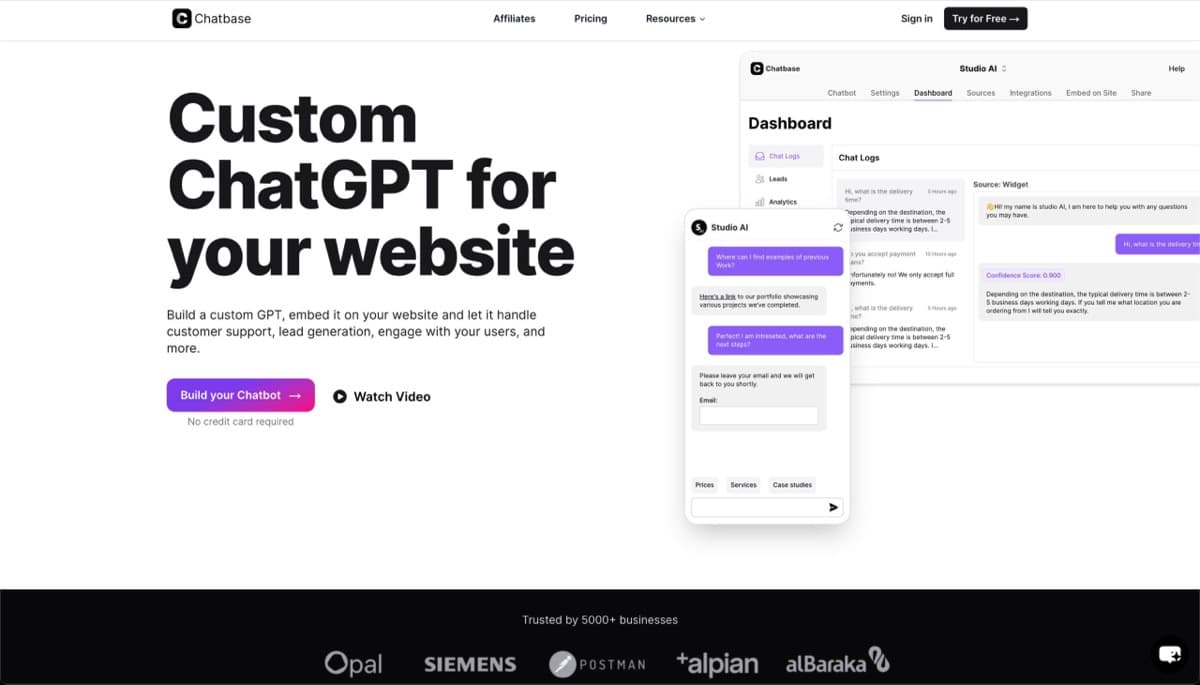
AI chatbot platform enabling custom bot creation from your data using RAG and GPT models, with no-code setup and automation features.
custom-data-trainingrag-chatbot
Open-source AI document intelligence platform using RAG for hallucination-free Q&A with source citations, supporting flexible deployment from cloud to fully on-premises.
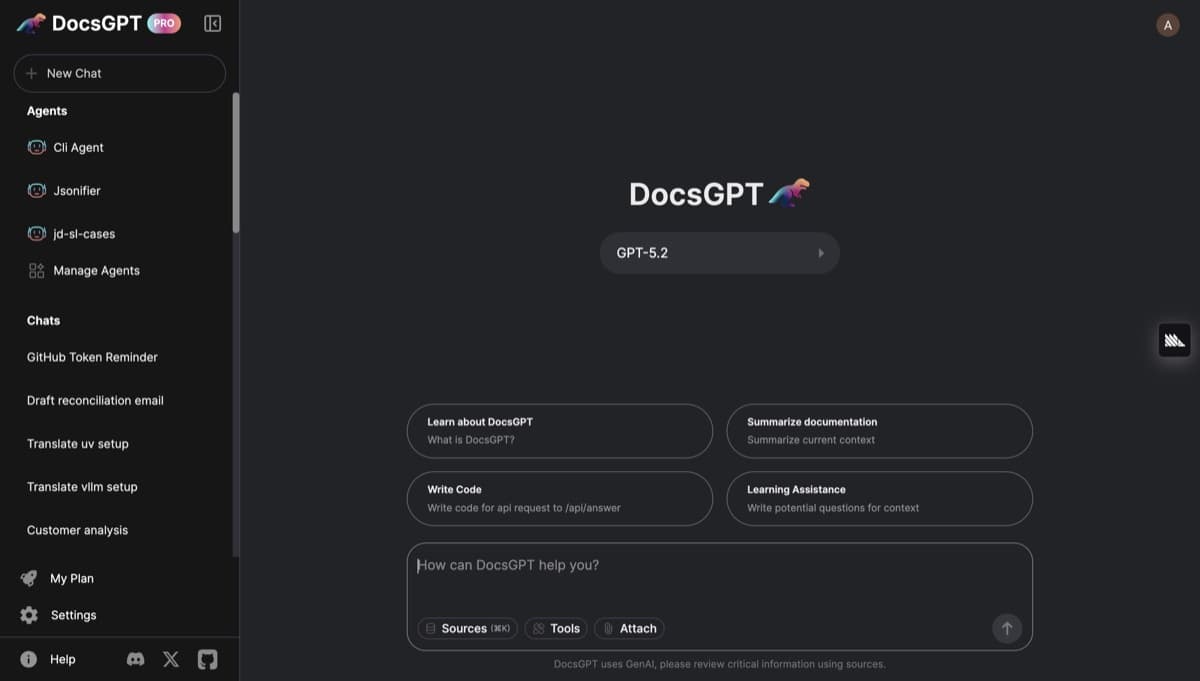
DocsGPT is an open-source AI document intelligence platform developed by Arc53 that transforms how organizations process, analyze, and retrieve information from their document repositories. Built on Retrieval-Augmented Generation (RAG) technology, it enables users to upload virtually any document format—from PDFs and Word files to spreadsheets, images, and web content—and receive accurate, citation-backed answers to natural language queries. The platform addresses a critical pain point for businesses: extracting value from unstructured data without compromising privacy or relying on third-party cloud services that may expose sensitive information.
What sets DocsGPT apart is its commitment to hallucination-free responses. Every answer includes source citations, allowing users to verify information directly from the original documents. The platform supports multiple LLM providers including OpenAI, Google, Anthropic, and local models through Ollama, giving organizations flexibility in their AI infrastructure. Whether you need a simple document chatbot or a complex enterprise knowledge management system, DocsGPT provides the building blocks through its Agent Builder and extensive API tooling. Here's what you need to know before signing up.
DocsGPT operates on a freemium model with three primary pathways. The open-source version remains completely free—self-host it on your own infrastructure using Docker or Kubernetes, paying only for your LLM API costs. The cloud-hosted version at app.docsgpt.cloud requires users to provide their own API keys for underlying language models, meaning you pay OpenAI, Anthropic, or other providers directly based on usage. Entry-level cloud tiers reportedly start around $1.99/month for added convenience features, though pricing details aren't prominently displayed on the website. This hybrid approach offers excellent value for technical teams willing to self-host, while providing a lower-friction path for organizations preferring managed infrastructure. Compared to competitors like ChatDOC or PDF.ai that charge per-document or per-page fees, DocsGPT's unlimited document approach and open-source foundation represent meaningful cost advantages at scale.
What works well:
Where it falls short:
DocsGPT targets technical users and organizations with specific privacy, customization, or cost requirements that off-the-shelf consumer tools can't meet. Development teams building custom AI applications will appreciate the extensive API surface and agent framework. Enterprises handling sensitive documents—legal firms, healthcare organizations, financial services—benefit from the self-hosted deployment option that keeps data entirely on-premises. Knowledge managers and support teams seeking to automate document Q&A without training data exposure will find the citation feature essential. However, non-technical users expecting a plug-and-play solution may struggle with the setup complexity, particularly the self-hosted variant. Those wanting maximum convenience without infrastructure management should consider the cloud version, though they must still budget for underlying LLM API costs.
DocsGPT earns its place as a capable alternative to proprietary document AI tools by combining open-source flexibility with enterprise-grade features. The hallucination-free citations, multi-format support, and flexible deployment options address real business needs that consumer tools often overlook. Technical teams willing to invest in self-hosting will find exceptional value, while the cloud option provides a reasonable middle ground for organizations prioritizing convenience over complete infrastructure control. The main considerations are the separate API key costs and the setup complexity for non-technical users. If your organization needs document intelligence with privacy guarantees and customization potential that justifies the technical investment, DocsGPT delivers—particularly when compared to increasingly expensive per-page pricing models from competitors.
AI chatbot platform enabling custom bot creation from your data using RAG and GPT models, with no-code setup and automation features.
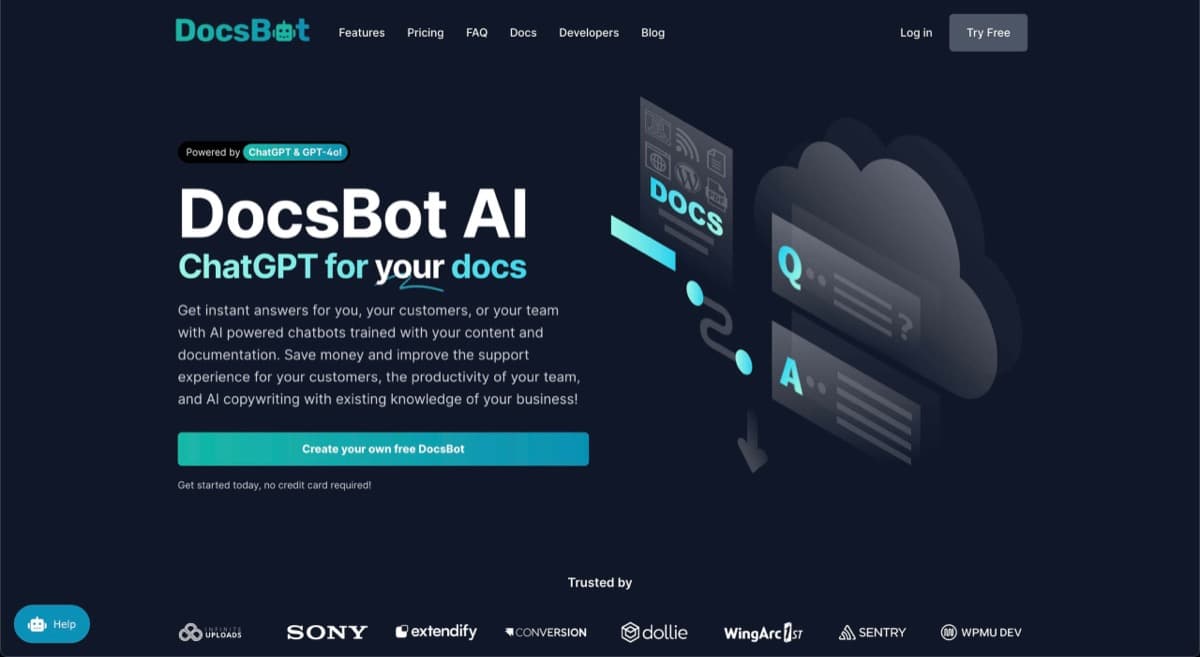
DocsBot AI is a no-code platform for building custom AI chatbots trained on documentation, websites, and 37+ content sources. Ideal for customer support automation and internal knowledge bases.
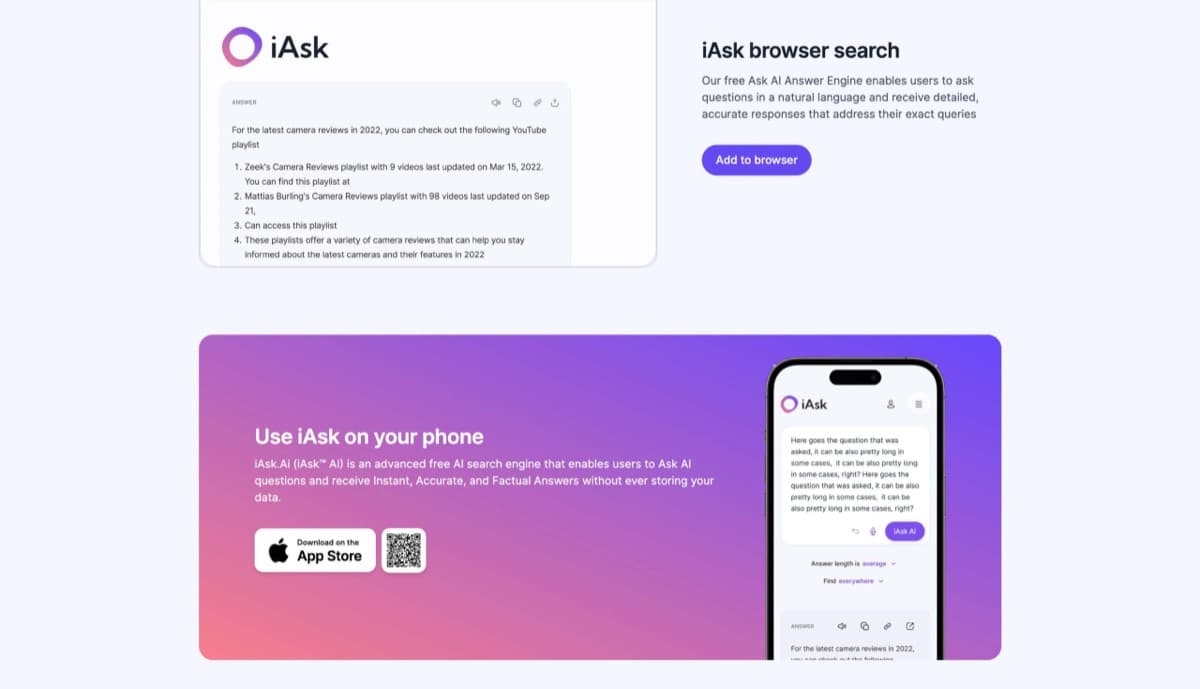
AI-powered search engine with instant answers, summarization, document analysis, and AI image generation. Free tier unlimited, Pro $9.95/mo.
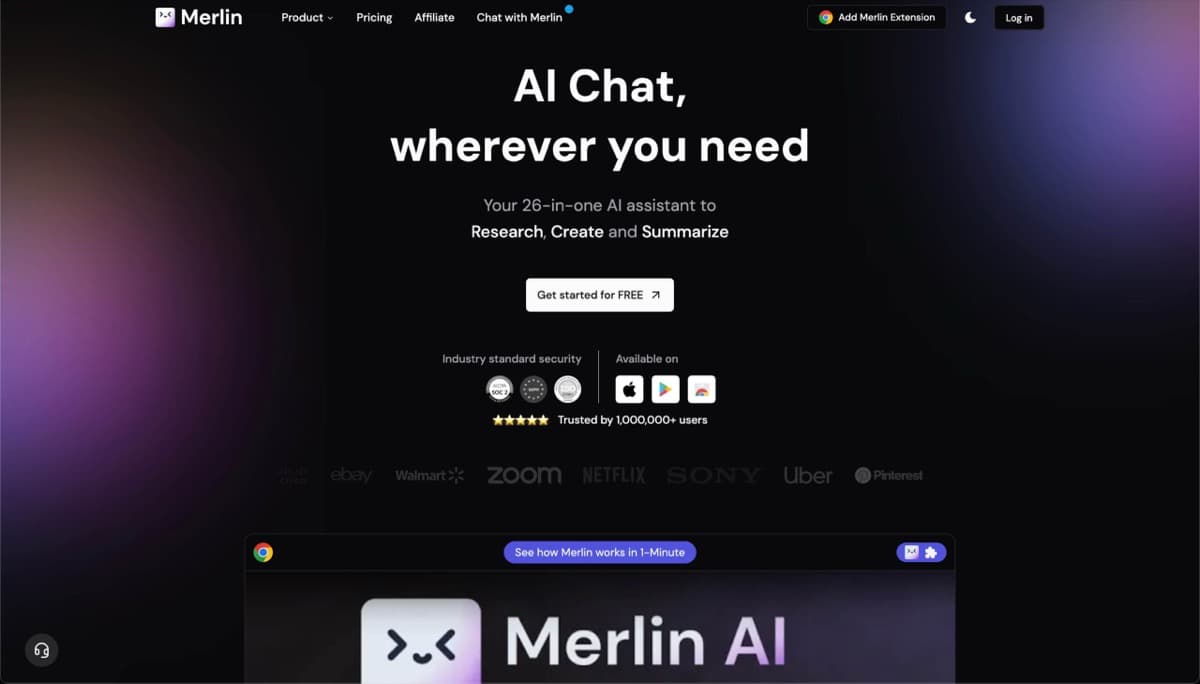
A powerful 26-in-1 AI browser extension that integrates ChatGPT, Claude, Gemini, and other models directly into websites like Gmail, LinkedIn, and YouTube for seamless productivity.