DreamGen Role PlayFreemium
Unrestricted AI role play platform with multi character scenarios, story generation, and image creation, no content filters, creative freedom unlocked.
uncensored roleplaymulti character scenarios
Steerable fiction workspace with a Scenario Codex, editable AI continuations, CYOA branches, an in context writing assistant and AniMuse illustrations.
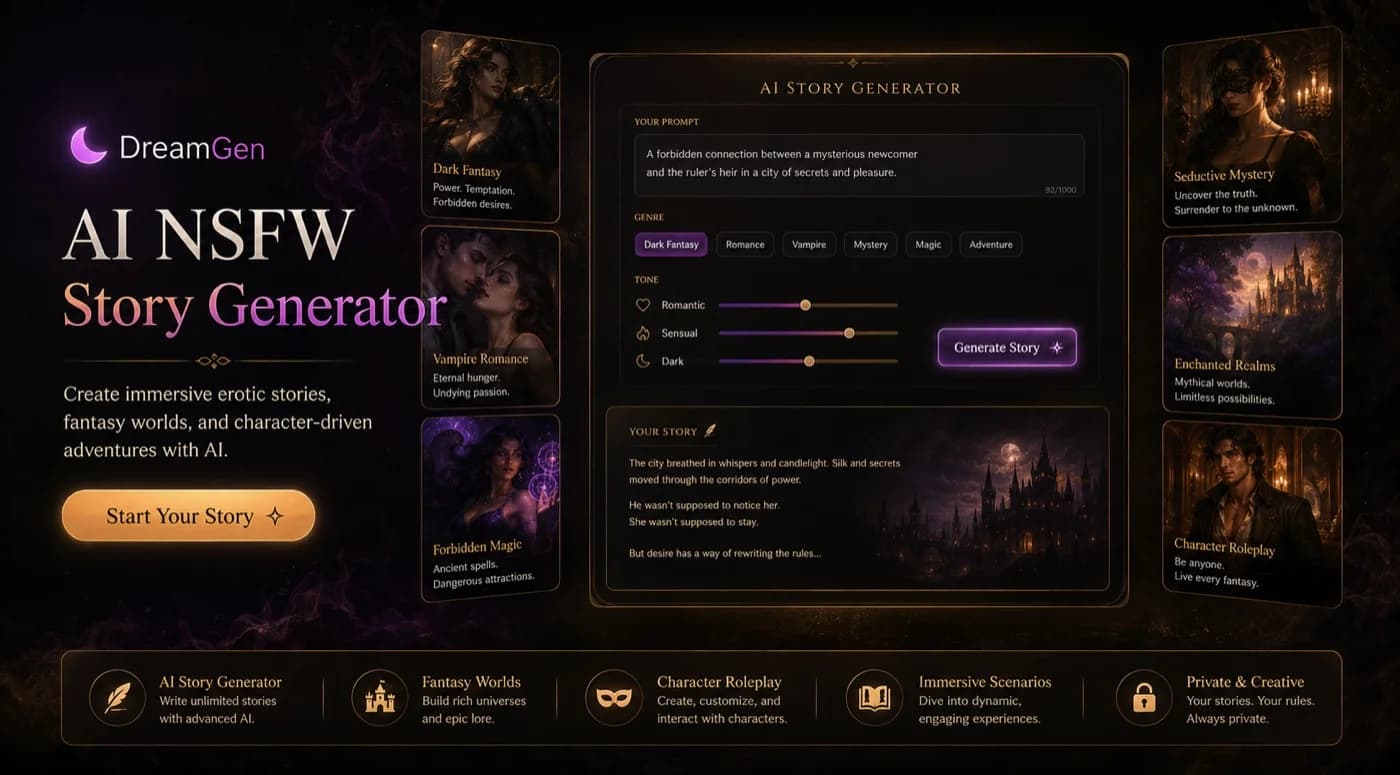
Story AI by DreamGen is an unusually complete drafting environment for fiction that needs both direction and continuity. The Codex, instruction blocks, editable continuations, Writing Assistant and CYOA options work as parts of the same manuscript, while the real constraint is how quickly scenario detail and story history compete for the selected context window.
DreamGen starts with a scenario rather than a blank chatbot prompt. A scenario can hold the plot, setting, prose style, cast, locations, objects, opening and examples, giving each generated continuation a defined fictional world to work from.
Editor's Pick
Voice, video & uncensored chat — 100% private. Your perfect partner, built to your exact specifications. Free to start.
The manuscript remains editable throughout. Writers can change their own prose or the model's output, rewind a generation, insert a director-style instruction, ask the Writing Assistant for a targeted revision, or clone the session before exploring a different branch.
Story AI by DreamGen is the story-writing mode inside DreamGen V2, a browser platform that also supports multi-character roleplay and AI image generation. It combines an editor, scenario management, model selection and recurring credit balance rather than generating one complete story from a short form.
Its Scenario Codex functions as a story bible, but continuity still depends on context. DreamGen counts the scenario definition and the accumulated manuscript against the model's context window and truncates older story text when necessary.
DreamGen fits fan fiction, serial erotica, fantasy campaigns and ensemble stories where characters, locations and plot rules need explicit definitions. It asks for more setup than a one-shot generator, but that setup remains editable as the manuscript changes.
It is a weaker fit for authors seeking a distraction-free manual editor, people who do not want to manage model credits, or anyone expecting the story bible to preserve an unlimited history independently of the model context.
| Feature | What it does | User benefit | Limitation or note |
|---|---|---|---|
| Scenario Codex | Defines plot, setting, style, characters, locations, objects, opening text and examples in a reusable story bible. | Gives the model explicit canon and voice guidance instead of relying on facts scattered through earlier chapters. | The Codex consumes context, so overly detailed entries leave less room for manuscript history. |
| Scenario Wizard and Editor | Builds a scenario conversationally, then moves it into a form-based editor for precise changes. | Lets a writer brainstorm quickly without surrendering control over the final world definition. | Public scenarios can also be cloned and adapted instead of starting from zero. |
| Instruction blocks | Places directions for plot, pacing, output length, character actions or prose style between editable story blocks. | Controls the next continuation without forcing the instruction itself into the published narrative. | Instructions guide the next generation; they do not guarantee every requested beat will be interpreted perfectly. |
| Writing Assistant | Uses the scenario and recent manuscript to brainstorm, rewrite, critique pacing or answer lore questions. | Handles revision and ideation without moving story context into a separate general-purpose chat. | Its own assistant conversation can reach a context limit and may need to be cleared. |
| Choose The Next Step | Generates CYOA-style options that can become editable instructions or continue the story immediately. | Breaks a stalled scene into concrete branches while leaving the author free to retry or write another direction. | Automatic suggestions use the selected model and therefore add to credit use. |
| Model and context controls | Offers changing first-party and third-party model choices with plan context limits of 5,000, 15,000 or 30,000 tokens. | Allows a writer to trade model quality, context and credit cost according to the manuscript. | The old opus-v1-sm and opus-v1-xl description is obsolete; current choices are shown in the live model picker. |
| AniMuse image generation | Generates illustrated characters and scenes using positive and negative prompts, Styles & Effects, CFG, steps and Turbo mode. | Adds visual references for a cast or setting without leaving the DreamGen account. | AniMuse favors tag-aware prompting and image generation draws from the credit system. |
| Clone and export | Clones a story session for alternate branches and exports finished work as Markdown or DreamGen JSON. | Separates experimentation from the primary draft and gives the author a portable backup. | Markdown is the readable export; JSON preserves data for DreamGen re-import. |
The Scenario Codex organizes the story's plot, setting, style, characters, locations, objects, opening and examples. Each field has a distinct job: style establishes voice and pacing, examples demonstrate the desired prose, and character or location entries supply facts the model can reuse.
The Scenario Wizard turns a rough premise into those structured elements through a conversation. A writer can then move the result into the manual editor, remove unnecessary detail, and update the scenario copy attached to a live story when a character or plot line changes.
A DreamGen manuscript is built from editable prose blocks and optional instruction blocks. Continue asks the model for the next passage, Rewind generates a different version, Undo removes the latest output, and direct editing treats AI prose as draft material rather than a locked chat response.
Instructions function like director's notes. They can name an event, set a word target, change pacing, describe a character reaction or shift the narrative style, giving the author a cleaner control surface than repeatedly restating the whole premise in prose.
The Writing Assistant can see the scenario and the recent part of the manuscript. It can propose a new character, rewrite a paragraph with more detail, assess pacing, brainstorm endings or answer a question about the fictional world.
Choose The Next Step adds another kind of assistance by generating possible story beats beneath the latest passage. An option can become an editable instruction, continue immediately, or be discarded in favor of a fresh set, making it practical to explore branches without giving up authorship.
DreamGen's AniMuse models generate illustrated characters and scenes from a mix of short natural-language phrases and Danbooru or E621-style tags. Separate Include and Exclude prompts, Styles & Effects, artist and composition tags, prompt strength and step controls give the image workflow more depth than a single story-cover button.
AniMuse A favors longer prompts and broader CFG settings, while AniMuse B generally works with lower prompt strength. Turbo mode reduces generation to four steps and credit use, making it practical for quick character concepts before spending more iterations on a finished illustration.
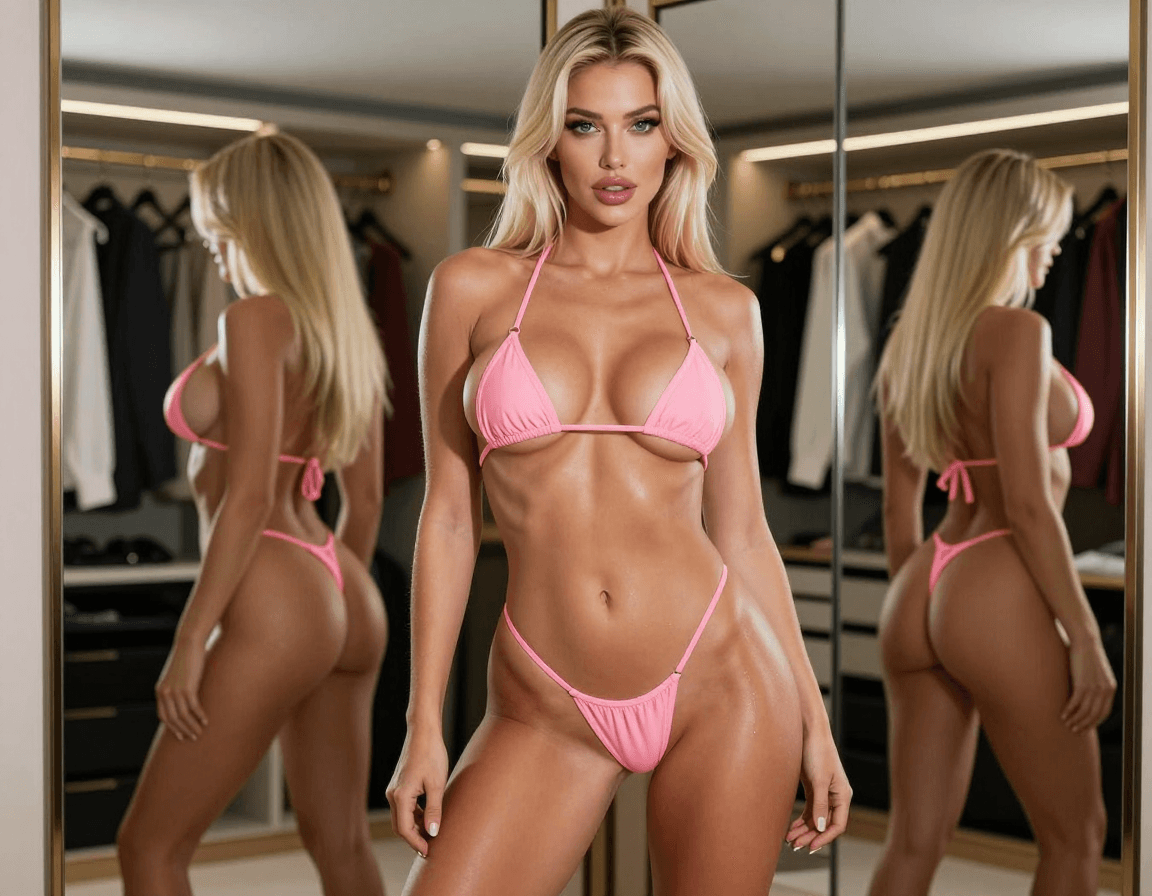
DreamGen Image Generator

The live model picker replaces the old two-model Opus description. DreamGen rotates first-party and third-party options with different context sizes and credit costs, so the most economical model for a short scene may not be the right choice for a long manuscript with a dense Codex.
Starter, Advanced and Pro provide 5,000, 15,000 and 30,000-token context windows. The scenario definition and story history must fit together; when they do not, older story text is truncated, which makes concise Codex entries more valuable than exhaustive biographies.
DreamGen serves adults and allows fictional sexual material within its acceptable-use rules. The current terms prohibit illegal material and sexual content involving minors, including fictional minors, so the accurate description is adult-friendly rather than rule-free.
Private stories and scenarios are stored so they can be retrieved, and automated systems may process them for service operation and moderation. Human access is limited to publication review, an appeal or support request, opted-in model improvement, or legal requirements; model-training consent is off by default.
Cloning creates a separate session from the same story, allowing an alternate romance, ending or point of view to develop without overwriting the primary draft. This is more deliberate than endlessly regenerating one response because both branches remain available.
Export provides Markdown for a readable manuscript and DreamGen JSON for backup or re-import. Writers planning further editing in another application should treat Markdown as the handoff format and retain JSON as the platform-specific archive.
DreamGen can be used free with recurring daily and monthly credits, but the public pricing table does not display the current free amounts. All models and features are presented as available to try, with actual generation volume determined by the account credit balance and chosen model.
Starter costs $7.83 per month and includes a 5,000-token context window, 375 monthly credits and 45 daily credits. Advanced costs $19.35 with 15,000 tokens, 2,250 monthly credits and 75 daily credits. Pro costs $48.30 with 30,000 tokens, 2,250 monthly credits, 75 daily credits, a 20% credit-pack discount and up to 60% off select third-party models.
The pricing page currently advertises temporary first-month reductions, including $6.26 for Starter, $15.48 for Advanced and $33.81 for Pro. Those promotional figures should not be confused with the regular recurring monthly rates.
| Tool | Best for | Key advantage | Main limitation | Review or comparison link |
|---|---|---|---|---|
| NovelAI | Long-form co-writing with unmetered text on paid plans and encrypted story storage | DreamGen has a guided Scenario Wizard, instruction blocks, CYOA suggestions and an assistant that reads the story context. | NovelAI offers a larger top context, simpler unlimited text generation and password-derived story encryption. | NovelAI review |
| NSFWStory | Generating a complete erotic story, cover and narration from one form | DreamGen gives the author an editable manuscript, reusable world definition and granular scene steering. | NSFWStory reaches a finished one-shot much faster and includes audio narration. | NSFWStory review |
| Perchance | Free no-account story, character, image and RPG generators | DreamGen provides a cohesive manuscript, structured Codex and dedicated revision tools. | Perchance removes subscriptions, credits and sign-in entirely. | Perchance review |
NovelAI is the direct long-form substitute, while NSFWStory and My Spicy Vanilla compress adult fiction into a faster form-driven workflow. Perchance removes cost and account friction but does not reproduce DreamGen's integrated story bible and editor.
HammerAI is the outlier for writers who would rather act out a narrative through local characters and group chat. DreamGen remains the more coherent choice when authored prose, revision and scene direction matter more than simulating conversation.
DreamGen earns its place as a serious AI fiction workspace because its planning and drafting features connect. The Scenario Codex shapes the manuscript, instructions steer each continuation, the Assistant revises against story context, and CYOA options expose possible branches without taking control away from the writer.
Its limits are architectural rather than cosmetic: detailed world data reduces room for story history, model choice changes credit economics, and the lowest paid context can feel small once a project grows.
Choose Story AI by DreamGen for steerable, illustrated fiction with a reusable story bible. Choose NovelAI for simpler unlimited co-writing, NSFWStory for immediate finished erotica, or Perchance when free no-account generation is the priority.
Limited Access
Voice, video & uncensored chat — 100% private. Your perfect partner, built to your exact specifications. Free to start.

Play the choice-driven relationship sim.

Build a custom companion from scratch.

The jealousy-driven sim experience.

Daily messages, photos, and personal attention.

Compare every AI girlfriend app.
2026 honest comparison rankings.
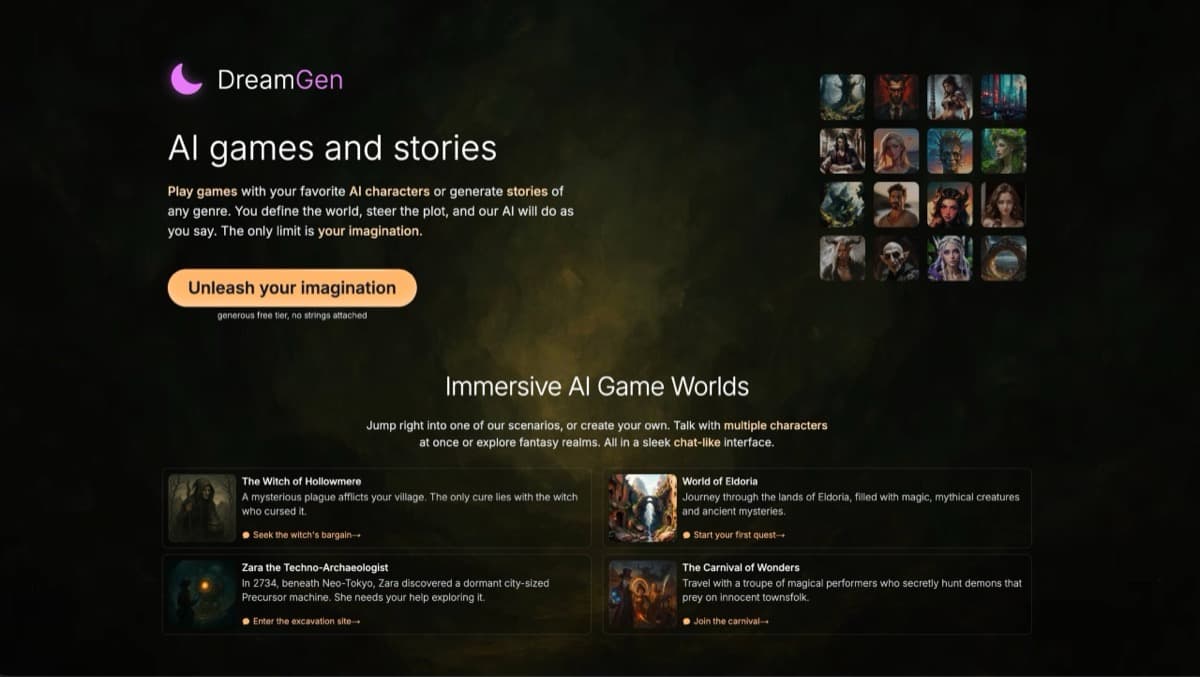
Unrestricted AI role play platform with multi character scenarios, story generation, and image creation, no content filters, creative freedom unlocked.
Create a realistic or anime AI girlfriend, then continue the same character through chat, selfies, voice messages, image generation, and short video.
Create hyper realistic, fully owned AI influencers with uncensored image and video generation, a cost effective playground for content creators and adult artists alike.
The Scenario Codex is the story bible attached to a scenario. It can define the plot, setting, style, characters, locations, objects, opening and example passages that the selected model uses when continuing the story.
Yes. Free accounts receive recurring monthly and daily credits and can try DreamGen's models and features. The public pricing page does not display the exact free credit amounts, so the account balance is the clearest measure of current free usage.
The regular monthly prices are $7.83 for Starter, $19.35 for Advanced and $48.30 for Pro. The plans provide 5,000, 15,000 and 30,000 token context windows respectively, with different recurring credits and model discounts. Temporary first month discounts may lower the initial checkout price.
DreamGen is restricted to adults aged 18 or older and permits fictional adult material within its terms. Illegal content and sexual content involving minors, including fictional minors, are prohibited, and automated moderation may enforce those rules.
Yes. DreamGen includes AniMuse image models with positive and negative prompting, Styles & Effects, prompt strength, step controls and a four step Turbo mode. Image generations use the account's model and credit system.
Yes. A finished story can be exported as Markdown for reading and publishing workflows or as DreamGen JSON for backup and later re import.
Answer 6 quick questions and get matched to the platforms that fit your preferences.
Find Your AI Companion